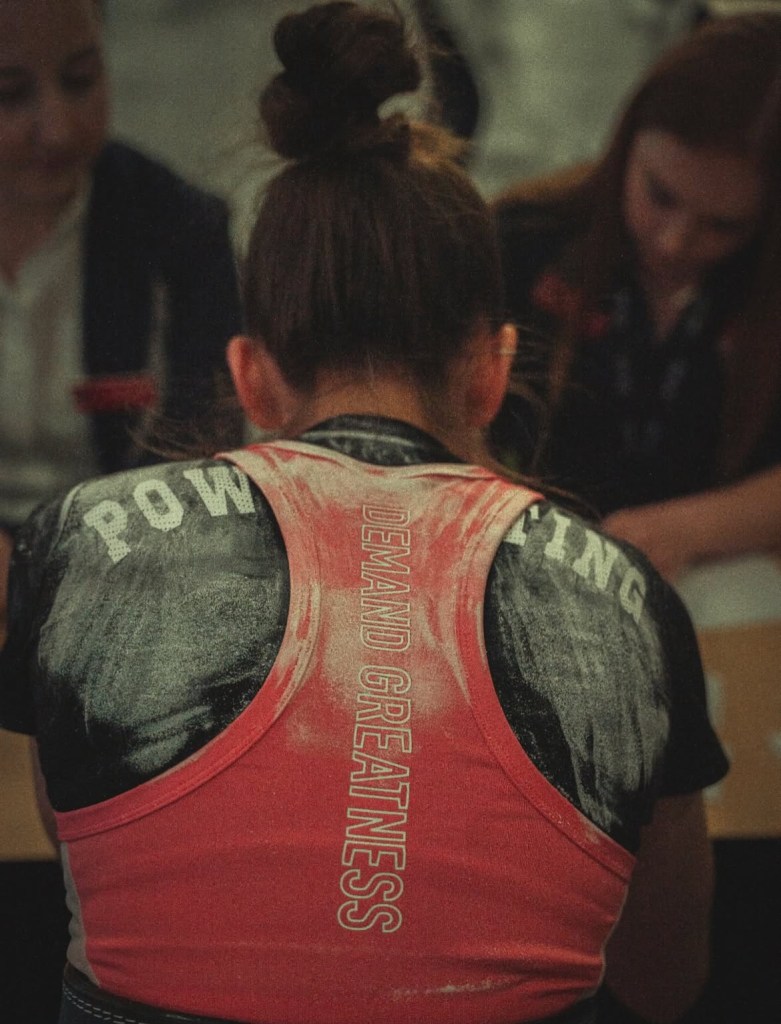
• Drive Without Direction Is Just Noise

    Drive is easy to admire. It looks powerful. It moves fast. It gets attention. Direction, on the other hand, is quieter. It requires thought. It requires restraint. It requires saying no as often as saying yes. The older I get, the more I realize that drive without direction can build momentum in the wrong direction just as efficiently as the right one.

    It is possible to be extremely disciplined and still misaligned. To wake up early, to work hard, to chase goals, and still end up somewhere you never intended to go. Movement alone does not equal progress. The question is not just “How hard am I working?” but “Toward what?” If I do not define what the end looks like, I will unconsciously adopt someone else’s version of success. Titles, income, recognition, none of those are inherently wrong, but they are terrible compasses.

    Direction requires a long view. It forces me to imagine who I want to become decades from now and then work backward from that vision. What kind of character do I want to be known for? What kind of relationships do I want to build? What kind of impact would actually feel meaningful? When those questions are clear, daily decisions become less confusing. Priorities stop competing and start aligning.

    Drive fuels effort. Direction determines outcome. Without direction, drive can become restless and consuming. It can expand endlessly, demanding more time, more energy, more validation. But when drive is anchored to principle and purpose, it becomes disciplined. It strengthens rather than erodes. It builds rather than consumes.

    There is also a difference between winning and winning well. True success is not achieved alone or at the expense of others. When direction includes people, when it includes collaboration, trust, and shared growth, the results multiply. One plus one becomes more than two. Progress stops being solitary and becomes synergistic.

    Finally, direction protects balance. It reminds me that renewal is not weakness and rest is not laziness. Life is meant to be lived, not merely endured. Passion must be sustained, not burned out.

    I do not want to live a life defined by speed alone. I want a life defined by alignment. Drive will move me forward. Direction will ensure I am moving toward something that actually matters.

  • Designing a Life That Outlasts the Exit

    Entrepreneurship has never felt abstract to me. It has always felt known and safe. I grew up watching my dad build companies from the ground up, pivot when things didn’t work, sell, start again, and carry the weight of responsibility. Business was never separate from our family life; it was woven into it. I was involved from a young age, sitting in meetings, hearing conversations about growth and risk, learning that opportunity often hides inside problems. Because of that, owning a business has never felt like a distant dream. It feels like a natural extension of who I am.

    At the same time, growing up inside that world has shown me both its beauty and its cost. I have seen the late nights and the constant mental engagement, the way an entrepreneur rarely fully “clocks out.” Drive can be powerful, but it can also expand endlessly if left unchecked. This week made me think less about whether I want to build something and more about how I want to build it. There is a difference between ambition that is intentional and ambition that quietly consumes everything around it.

    One idea that resonated deeply with me is the long view. It is easy to think in terms of the next milestone, the next launch, the next financial benchmark. But when I zoom out and consider the next twenty or thirty years, the equation changes. Compounding effort over decades in one meaningful direction creates depth that short bursts of intensity never could. I do not want to build simply for the exit or the quick win. I want to build something I can grow with, something that matures as I do.

    At the same time, I want to be a mom. Not as an afterthought or a secondary identity, but fully and intentionally. I do not see business and motherhood as competing dreams, but I know they will require boundaries and clarity. Time does not expand when responsibilities increase; priorities simply become more visible. Certain things can flex, and there are certain things that cannot. Faith, family, and integrity are not areas I am willing to compromise to protect ego or even career momentum.

    Watching my dad taught me that work can be meaningful and that providing is powerful. This week reminded me that legacy is measured differently from success. A thousand years from now, no one will care what valuation a company reached. What will matter is the character formed, the relationships strengthened, and the impact sustained over time.

    I am looking forward to learning how to design a life where ambition is disciplined rather than reckless, where building a company strengthens my family instead of competing with it. I do not want to choose between constructing a business and constructing a home. I want to build both slowly, deliberately, and with the kind of loyalty that lasts.

  • Choosing the Hero’s Journey

    Most people don’t fail because they aim too low. They fail because they spend too long preparing to aim perfectly. There is a quiet temptation to wait for clarity before action, to delay meaningful decisions until certainty arrives. But life rarely offers certainty upfront. Instead, it reveals direction through movement. The path becomes visible only after the first step is taken.

    A meaningful life is not built by avoiding struggle, but by engaging it with intention. Difficulty is not evidence of being on the wrong path, but often is proof that the work matters. Growth requires friction. Change demands discomfort. The idea that fulfillment should feel easy or immediately rewarding is one of the most misleading narratives we hear. What shapes us most deeply usually costs us something first: time, pride, comfort, or convenience.

    Purpose is not something we stumble upon fully formed. It emerges at the intersection of what we are naturally able to do, what gives us energy rather than draining it, and what the world genuinely needs. That intersection is rarely obvious early on. It is discovered through experimentation, reflection, and service. Clarity follows commitment, not the other way around.

    Character becomes especially visible when progress is slow and recognition is absent. In those moments, it is tempting to cut corners or justify compromises that seem harmless. But the most defining choices are often the least dramatic. Integrity is shaped in ordinary decisions, repeated consistently. Over time, those decisions form patterns, and those patterns determine who we become.

    Another quiet shift happens when success stops being measured by comparison and starts being measured by alignment. When effort is guided by values rather than validation, satisfaction becomes more durable. There will always be someone ahead, faster, or more accomplished. A life spent chasing those benchmarks eventually becomes exhausting. A life anchored in purpose, however, builds resilience.

    In the end, fulfillment is less about control and more about courage, the courage to act without complete certainty, to persist without immediate results, and to remain grounded in values when shortcuts are available. A meaningful life is not defined by avoiding mistakes, but by choosing growth, contribution, and integrity again and again. Over time, those choices shape not only the direction of a life, but the depth of it.

  • How Will You Measure Your Life?

    The way we measure our lives quietly shapes the choices we make every day. Whether we realize it or not, everyone operates with a scoreboard. Some people measure life by achievement, others by stability, influence, or recognition. The danger is not in having a metric, but in choosing one that rewards the wrong things. When success is defined too narrowly, it becomes easy to win at life while slowly losing what matters most.

    A life well lived is rarely the result of one defining moment. It is built through consistent decisions about where time, energy, and attention are invested. What we prioritize reveals what we truly value, not what we claim to value. Over time, those investments compound. Relationships either deepen or erode. Character is either reinforced or weakened. Purpose is either clarified or quietly replaced by convenience.

    One of the most subtle threats to a meaningful life is the belief that small compromises do not matter. Rarely do people abandon their values all at once. Instead, it happens through justification. One exception. One rationalization. One moment where the cost of doing the right thing feels higher than the cost of not doing it. These moments seem insignificant in the moment, but they set patterns. Patterns become habits, and habits become identity. Integrity is not tested in dramatic situations, but is tested in ordinary ones.

    True fulfillment is also deeply connected to where effort is placed when results are not immediate. Many of the most important investments in life do not offer quick feedback or visible progress. Relationships, trust, faith, and personal growth require patience and consistency long before they show measurable returns. Because of this, they are often neglected in favor of pursuits that provide faster validation. Yet in the long run, these are the areas that determine whether success feels meaningful or hollow.

    Another overlooked measure of life is the impact we have on people rather than outcomes. Titles, income, and accomplishments eventually fade in significance, but the way we influence others endures. The lives we strengthen, encourage, and uplift become part of our legacy. Measuring life through contribution rather than comparison changes how success is defined and pursued.

    Ultimately, the question of how we measure our lives forces us to be honest. It asks what we are optimizing for and why. A meaningful life is not about perfection or constant achievement. It is about alignment between values and actions, between priorities and behavior, and between who we are becoming and who we hope to be. The measure that matters most is whether, over time, our choices are leading us toward a life we would be proud to stand behind.

  • Integrity as a Way of Life

    Ethics are not just a set of rules we follow when someone is watching; they are the quiet decisions that shape who we become over time. They influence how we treat people, how we use power, and what we choose to value when pressure is high and shortcuts are available. More than anything, ethics reveal what we truly believe matters.

    Integrity is often talked about as honesty, but it runs deeper than telling the truth. It is about alignment, between beliefs and actions, intentions and outcomes. A person with integrity does not live one way publicly and another way privately. They do not adjust their values depending on convenience or reward. Ethical living requires consistency, especially when it costs something.

    One of the most challenging truths about ethics is that compromise rarely begins with major wrongdoing. It begins with small rationalizations. A slight bending of the rules. A justification that “everyone does it.” Over time, those small decisions form habits, and habits form character. This is why ethics matter long before a person is in a position of authority or influence. Who we become in quiet moments determines how we act when the stakes are high.

    In both life and business, trust is the foundation that everything else rests on. Relationships, leadership, and long-term success depend on it. Trust cannot exist without integrity, and integrity cannot exist without accountability. When trust is broken, it is difficult, sometimes impossible, to fully restore. Ethical behavior is not only a moral responsibility but a practical necessity.

    I also believe ethics are deeply connected to purpose. When success is defined solely by achievement, income, or recognition, ethical lines become easier to cross. But when success is rooted in service, contribution, and impact, integrity becomes non-negotiable. Values act as a compass, guiding decisions when outcomes are uncertain and pressure is intense.

    Living ethically does not mean living perfectly. It means being willing to self-correct, to acknowledge mistakes, and to choose growth over ego. Integrity is built through humility and a commitment to do better, not through flawless performance.

    Ultimately, ethics shape the kind of life we are building, not just the kind of career we are pursuing. They determine whether our success brings peace or regret, trust or isolation, meaning or emptiness. A life grounded in integrity may not always be the easiest path, but it is the one that leads to lasting fulfillment.

  • Creating a Life of Meaning Through Priorities

    Creating a life of meaning is less about achieving impressive accomplishments and more about choosing what matters most and living in alignment with those choices. Randy Pausch’s Last Lecture reinforced this idea for me. He did not achieve his childhood dreams because life handed them to him easily, but because he lived intentionally. He understood that meaning comes from persistence, values, and how we respond to obstacles. His life showed that success is not defined by avoiding difficulty, but by staying committed to what truly matters, even when the path is uncomfortable.

    I believe dreaming is essential because dreams reveal our priorities. They expose what we are willing to sacrifice for and what we are not. Without dreams, it is easy to drift into a life shaped by convenience, pressure, or comparison. Dreams give direction, but priorities determine whether those dreams are realistic or sustainable. A dream without aligned priorities eventually collapses under its own weight.

    One of my deepest dreams has always been to have a family and be a present, intentional mother, while also using the skills God has given me to pursue excellence in the workforce. For a long time, I worried that these two desires conflicted. Society often frames success as an either/or choice. You are either fully devoted to work or fully devoted to family. I no longer believe that. I believe meaning comes from integration, not imbalance.

    This dream is achievable because I am clear about my priorities. Motherhood is not something I want to fit in around work. At the same time, I do not believe God gives talents without purpose. I feel a responsibility to develop my abilities, contribute meaningfully, and pursue excellence professionally. The key is not doing everything, but doing the right things in the right order.

    Priorities are what make a goal achievable or impossible. If work becomes my identity, this dream fails. If fear keeps me from using my skills, it also fails. Creating a life of meaning requires boundaries to protect what matters most. That means choosing work that aligns with my values, being willing to say no to opportunities that demand too much, and defining success on my own terms rather than the world’s.

    A meaningful life is not built by accident. It is built by consistently choosing to live in alignment with values. If I stay grounded in those values, I believe it is possible to be both a devoted mother and an impactful professional, and to find real fulfillment in the balance between the two.

  • The Importance of a Team

    Over the past two weeks, I have been traveling throughout Asia, which gave me an unexpected but powerful lesson: the importance of having a strong team. While travel can easily become stressful, especially when responsibilities continue at home, this experience reinforced how critical trust, communication, and shared ownership are within any successful business.

    Before leaving, I worked closely with my team to clearly outline expectations, deadlines, and responsibilities. We made sure that tasks were delegated intentionally and that everyone understood not only what needed to be done, but why it mattered. Because of this preparation, I was able to travel with very little stress, knowing that my responsibilities were being handled. That peace of mind allowed me to stay present during my travels rather than constantly worrying about what might be falling apart back home.

    What stood out most to me was how seamlessly my team operated in my absence. Communication remained clear and consistent, and when questions arose, they were addressed quickly and professionally. This experience highlighted that a strong team does not rely on constant watching, but instead relies on mutual respect, accountability, and trust. Each team member understands their role and takes ownership of their work, which creates stability even when circumstances change.

    This experience helped me better understand that entrepreneurship is not a solo pursuit. While individual drive and vision are important, long-term success depends on the people you surround yourself with. A reliable team allows for flexibility, growth, and sustainability, qualities that are essential in both business and life. I also realized that investing time into building relationships, setting clear expectations, and allowing for open communication are extremely important.

    As I continue this course, I am looking forward to learning more about how to intentionally build and lead effective teams. This experience has already shown me that when a team is built on trust and clarity, it not only improves productivity but also creates freedom, freedom to grow, explore, and focus on the bigger picture.